
 2 hours ago
1
2 hours ago
1
By Adebayo Gbeja
The Prisoners Rehabilitation and Welfare Action (PRAWA) says effective implementation of non-custodial measures can transform persons who complete their sentences into productive members and assets to their communities.
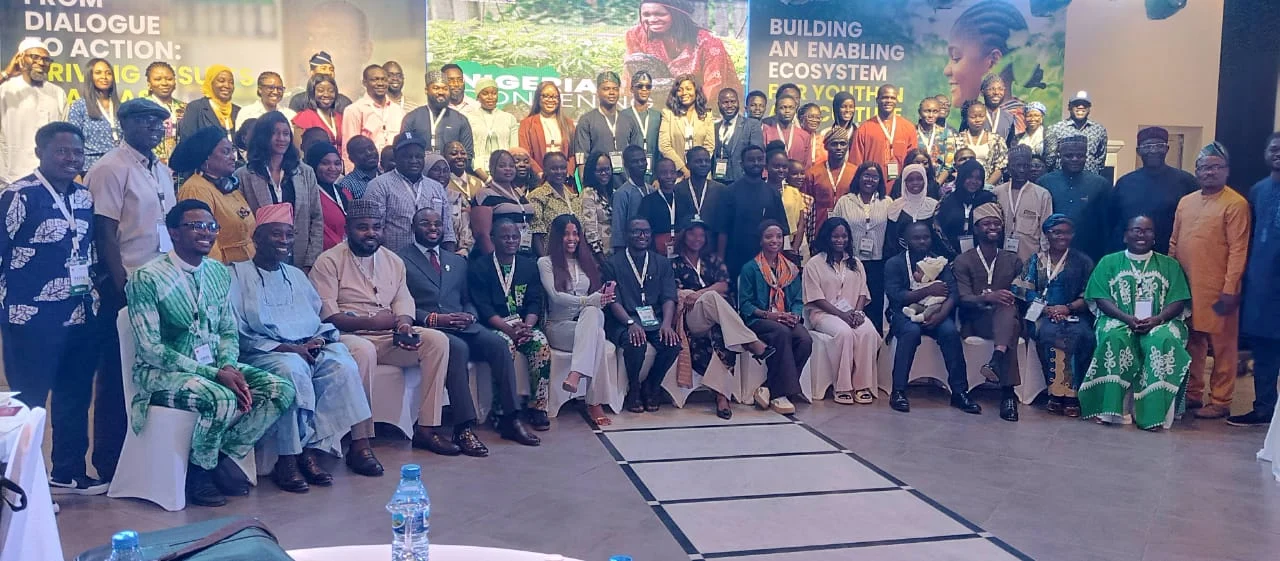
The Executive Director of PRAWA, Dr Uju Agomoh, said this in Abuja at a high-level national policy dialogue and peer learning on the implementation of non-custodial measures in Nigeria.
The News Agency of Nigeria (NAN) reports that the event was organised by PRAWA with support from the Rule of Law and Anti-Corruption in Nigeria (RoLAC II) Programme, implemented by International Institute for Democracy and Electoral Assistance (IDEA).
The dialogue had as its theme “From Practice to Policy: Strengthening the Effective and Sustainable Implementation of Non-Custodial Measures in Nigeria”.
Agomoh said PRAWA’s intervention went beyond providing start-up support to persons completing non-custodial measures, as beneficiaries were encouraged to establish sustainable enterprises to support their families and communities.
She also said the enterprises were designed to demonstrate successful reintegration, generate income and create opportunities for others, adding that beneficiaries were encouraged to maintain acceptable quality standards and train others.
“Instead of somebody being put in life custody and costing more money to the government, you are turning this person into a vehicle for transformation.
“This is not only for them and their families, but also making that impact in the community,” she said.
Agomoh further said that PRAWA had developed practical mechanisms to improve the implementation of community service, provided under Section 47 of the Nigerian Correctional Service (NCoS) Act 2019.
She said inadequate staffing within the NCoS remained a challenge in supervising persons sentenced to community service.
According to her, this prompted PRAWA into supporting the creation of community service placement centres and agreements with government and non-governmental organisations.
She said the arrangement enabled host organisations to record beneficiaries’ attendance and working hours, allowing correctional authorities to monitor compliance while reducing the supervision burden on non-custodial officers.
The PRAWA boss also said that the organisation developed a mechanism for determining the monetary value of work performed through community service, based on the cost of hiring an individual to perform similar tasks.
She said the data would enable the judiciary and NCoS to demonstrate the economic value and savings generated through community service, adding that the project also supported the development of structures for parole and probation.
She identified the judiciary, correctional service and prosecutors as key institutions requiring sustained collaboration to effectively implement non-custodial measures.
She added that the project, initially designed to cover seven states and the FCT, had extended its benefits through online training and capacity-building activities involving correctional officers.
Agomoh said the project would formally end on Oct. 14, but urged stakeholders to sustain its gains, noting that the end of project funding should not mean the end of the reform initiative.(NAN)(www.nannews.ng)
Edited by Deborah Coker










 English (US) ·