
 2 hours ago
1
2 hours ago
1
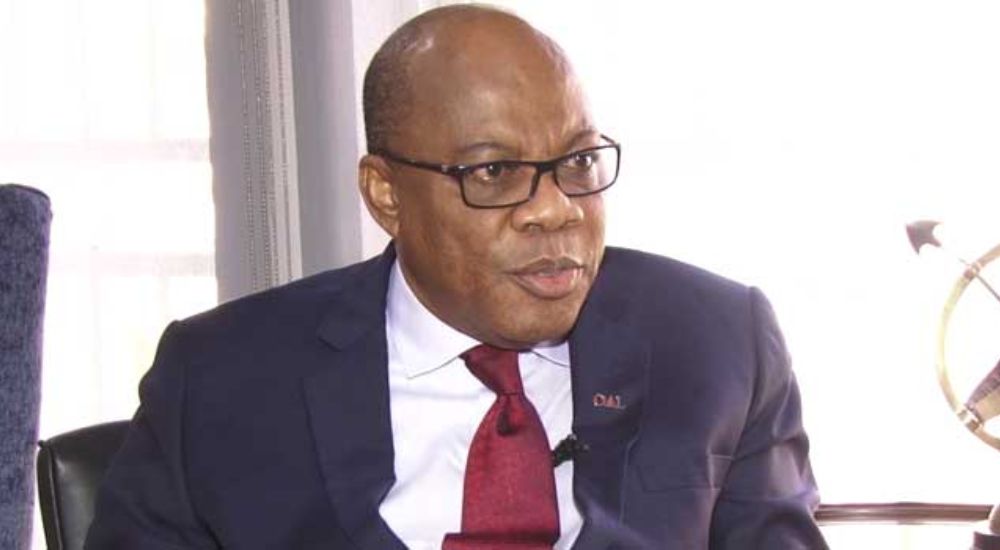 Former President of the Nigerian Bar Association (NBA), Olisa Agbakoba
Human rights lawyer and former Nigerian Bar Association President, Olisa Agbakoba, has proposed a domestic crude oil pricing mechanism that could bring the price of petrol in Nigeria down to about N400 per litre.
Agbakoba made the proposal on Thursday at the annual conference of the National Association of Energy Correspondents in Lagos, where he urged presidential candidates ahead of the 2027 elections to clearly state how they intend to address the rising cost of petrol and the wider cost-of-living crisis.
He argued that Nigeria could introduce a separate pricing structure for crude supplied to the domestic market, allowing local refineries to access crude at a price different from the international benchmark.
According to him, such a policy could significantly reduce the cost of petrol and ease the economic pressure on households and businesses.
Agbakoba said the removal of the former petrol subsidy was understandable because of the corruption associated with the system, but maintained that the Federal Government could still introduce a new domestic crude price differential without returning to the old subsidy regime.
“There’s something called subsidy. Is it a burden? We have a number of presidential candidates. Can we please ask them what they intend to do about subsidy? It’s a big issue,” he said.
He challenged presidential candidates to tell Nigerians whether they would support a domestic crude price of about $40 per barrel even when international prices are substantially higher.
He said such a policy could allow Nigerians to purchase petrol at a more affordable price.
“Therefore, what will the presidential candidates say to us? Who will receive our votes? Will they be prepared to tell us that if they become elected, the price differential for crude locally will be $40, even if it is $100 or whatever internationally? And therefore, we can buy our petrol for N400. Wouldn’t that be good news?” Agbakoba asked.
The former NBA president said the issue of petroleum pricing should be treated as a major political and economic concern because of its direct impact on the cost of living.
He noted that the rising price of petrol had contributed significantly to the financial difficulties confronting ordinary Nigerians.
Agbakoba illustrated the severity of the situation by recalling that medication he previously bought for N800 now costs about N20,000.
“The reason why Nigerians are hungry is that the price of petroleum is too high,” he said, urging energy journalists to place the impact of petroleum pricing on households at the centre of public debate.
He also cited Saudi Arabia as an example of a country that maintains a different pricing arrangement for its domestic market.
Agbakoba further questioned the structure of Nigeria’s energy sector, arguing that President Bola Tinubu should no longer simultaneously serve as the Minister of Petroleum.
He proposed the creation of a unified Ministry of Energy responsible for electricity, gas and crude oil.
“The Nigerian president cannot be minister of petroleum. He can’t. Number two, it’s time to merge electricity, gas, crude into one overall ministry called the Ministry of Energy,” he said.
The lawyer also raised concerns over the ongoing divestment of oil and gas assets by international oil companies, warning prospective investors to conduct proper legal and structural due diligence before acquiring the assets.
He compared the situation to challenges experienced by Nigeria’s electricity distribution companies, warning that investors could encounter serious problems if they acquire assets without properly examining their underlying legal and structural frameworks.








 English (US) ·