
 1 hour ago
2
By Justina Auta
Experts have called for regular Post-Legislative Scrutiny (PLS) of enacted laws to strengthen governance, improve accountability and address implementation gaps across Nigeria.
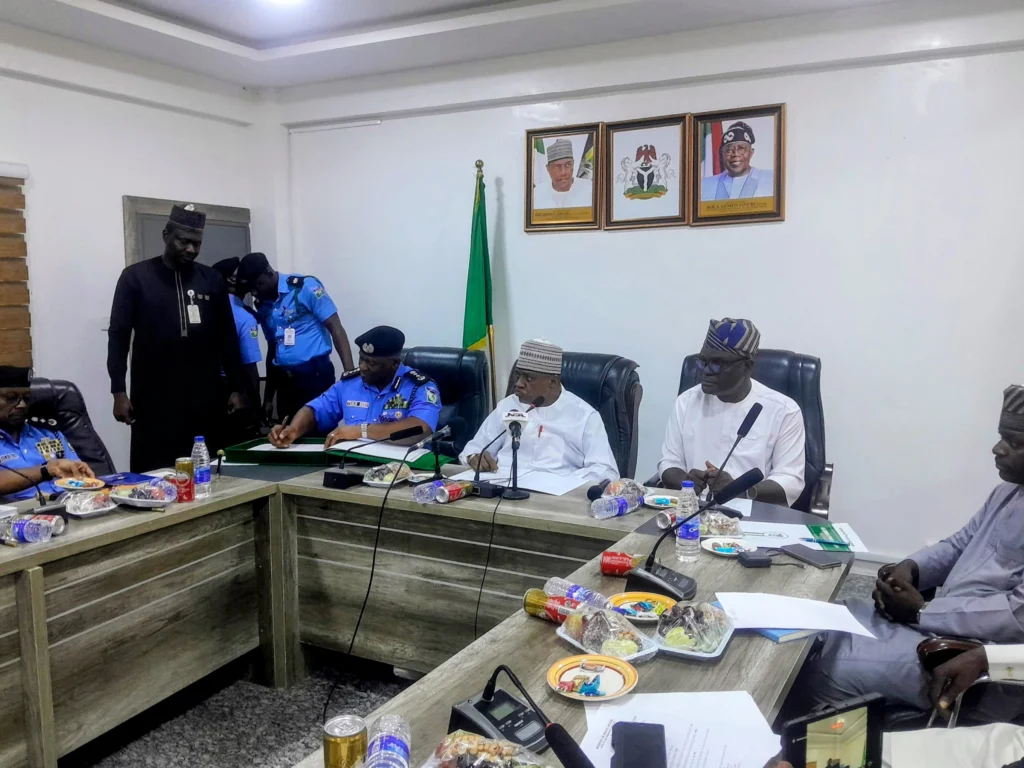
They made the call at a two-day Post-Legislative Scrutiny (PLS) Assist Prototype Capacity-Building Workshop and Mock PLS Inquiry organised by the Westminster Foundation for Democracy (WFD) in Abuja.
Mr Adebowale Olorunmola, WFD Country Director in Nigeria, said PLS would enable lawmakers to assess the effectiveness of legislation two or three years after enactment and determine whether it achieved its intended objectives.
Olorunmola said the process would also help identify implementation gaps and unintended consequences that might require legislative intervention.
He said lawmakers should not wait for public complaints or protests before examining the effectiveness of existing laws.
He described PLS as a systematic process involving citizens, relevant stakeholders and law enforcement agencies in assessing the implementation and impact of legislation.
According to him, WFD was collaborating with the National Institute for Legislative and Democratic Studies (NILDS) to institutionalise the practice at national and subnational levels.
Olorunmola said that NILDS had established a dedicated PLS unit following capacity-building engagements, while Oyo and Delta states had also taken steps towards adopting the framework.
He said Oyo State had established a PLS unit, while Delta had created a directorate to coordinate the process.
The WFD country director urged NILDS to extend its capacity-building efforts to all 36 state Houses of Assembly to promote wider adoption and sustainability.
He added that WFD had developed guidelines to assist state assemblies in institutionalising PLS without depending entirely on development partners.
Mrs Okundeji Aderonke, PLS Unit Coordinator, Oyo State House of Assembly, said the assembly inaugurated Nigeria’s first subnational PLS unit in January 2025.
Aderonke said the unit had conducted inquiries into the Oyo State Open Rearing and Grazing Regulation Law, 2019, and the Oyo State Security Network Agency Law, 2020, popularly known as Amotekun.
She said the assembly was preparing to scrutinise the state’s Sexual and Gender-Based Violence Referral Centre Agency Law.
According to her, the proposed inquiry would involve engaging survivors and other relevant stakeholders to obtain evidence on the law’s implementation and identify gaps requiring attention.
“We need to engage with survivors, those people that are really involved in this matter, because that is where we are going to get the evidence that will back up our findings,” she said.
Aderonke urged the government to support PLS through collaboration between the legislative and executive arms, particularly the Ministry of Justice.
Similarly, Mr Rabudike Emmanuel, Director, Post-Legislative Scrutiny Department, Delta State House of Assembly, described PLS as an important mechanism for evaluating the practical impact of legislation on citizens.
Emmanuel said the process would enable lawmakers to identify shortcomings in existing laws and recommend improvements to strengthen implementation, policymaking and development.
The workshop brought together participants from NILDS and the Oyo and Delta State Houses of Assembly.
It featured practical sessions and a simulated, desk-based PLS inquiry to introduce and test the PLS Assist Prototype, a technology-driven tool designed to support legislative research and scrutiny processes.(NAN)
Edited by Abiemwense Moru










 English (US) ·