
 2 hours ago
1
2 hours ago
1
From a revived brewery and moribund factories to new bridges, modern healthcare facilities and township roads, a three-day media tour of Benue State has showcased Governor Hyacinth Alia’s development drive and the growing political alliance between him and President Bola Tinubu ahead of the 2027 elections.
By Ayorinde Oluokun
Benue State Governor Hyacinth Alia says his administration’s relationship with President Bola Tinubu’s led Federal Government has ushered in a new era of development, with billions of naira in infrastructure, industrial revival, healthcare and social interventions reshaping the North-Central state.
Speaking to journalists and members of the presidential media team after a three-day tour of Benue, Alia described the relationship as one built on mutual support, insisting that the Federal Government now shares in the state’s triumphs and challenges.
“This is why when we are rejoicing, they (the Federal Government) are here rejoicing with us. When we are mourning, they are also feeling the pinch, and they are here with us also to mourn,” the governor said.
Beyond the political camaraderie, projects inspected during the tour point to an ambitious development agenda aimed at reviving Benue’s productive economy, improving transportation, expanding access to healthcare and unlocking the commercial potential of its vast agricultural resources.
The tour, organised under the Renewed Hope Ambassadors initiative, took journalists across several parts of the state, from industrial facilities and township roads to federal highway projects, bridges, waterworks and the Benue State University Teaching Hospital.
For a state widely regarded as Nigeria’s food basket because of its agricultural potential, the combination of improved federal funding, infrastructure spending and industrial revival pointed at Alia’s determination to deliver sustained economic growth and better living conditions for his people.
 Ode speaking to journalists
Alia promises Tinubu one million votes in 2027
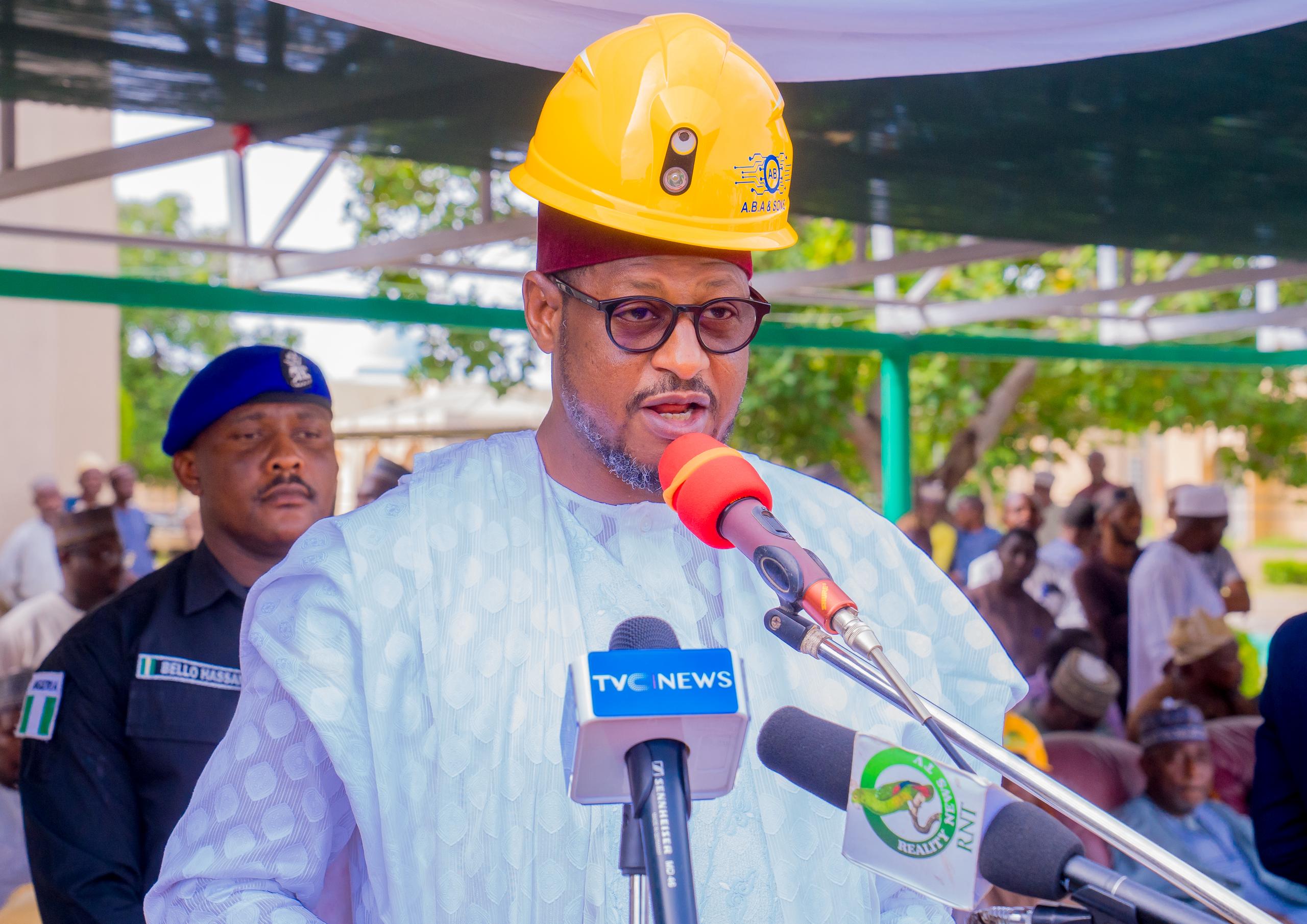
The political implications of the emerging partnership were unmistakable during the tour. Benue Deputy Governor Sam Ode disclosed that Alia had promised to deliver one million votes for Tinubu in the 2027 presidential election, describing the pledge as both an expression of appreciation and a commitment to sustaining ongoing development projects.
Ode, who led journalists to some of the projects, said increased allocations from the Federation Account had helped state and local governments to finance development initiatives.
He argued, however, that access to funds alone was not enough, insisting that responsible management was essential to achieving tangible results.
“I can tell you from a close position as the Vice Chairman of the Benue State Executive Council, that Governor Alia is one of those governors who is being responsive and who is being responsible with the finances of Benue,” Ode said.
“He’s been frugal and prudent in the application of these resources, and it is translated to what you are seeing on ground.”
The deputy governor said he had accepted the responsibility of mobilising the state’s political leadership and residents to fulfil Alia’s electoral promise.
“Father Alia made a pronouncement that Benue will deliver one million votes to Mr President. I think my responsibility as deputy governor is to make sure that I mobilise the executive council and the people of Benue State in their large numbers to actualise that promise,” he said.
The pledge places the state’s development agenda firmly within the political calculations ahead of 2027, with the governor openly linking federal support and ongoing projects to the prospect of renewed electoral mandates.
 Inside the Food Basket Brewery,
Brewery revival puts jobs and agriculture in focus
One of the major industrial projects showcased during the tour was the Food Basket Brewery, established under Alia’s administration to stimulate economic activity, create employment and strengthen the state’s agricultural value chain.
The facility produces Ziva beer, Ziva Malt and other beverages, with the state government presenting it as part of a wider effort to revive industrial production and create opportunities for residents.
Ode said the brewery was more than a producer of alcoholic beverages, noting that it also manufactured other food and beverage products.
He added that the factory was providing direct and indirect employment to more than 2,000 people while sourcing raw materials, including millet, guinea corn and maize, from local producers.
The strategy is intended to create a stronger link between agriculture and industry, allowing farmers to supply processing plants while generating employment and commercial opportunities beyond the farm.
For Benue, where agriculture remains central to livelihoods, the success of such ventures could help reduce dependence on the sale of unprocessed produce.
The administration is also working to revive Taraku Mills, an industrial facility established during the administration of former governor Aper Aku but which had remained largely dormant since the mid-1990s.
According to the governor’s Chief Press Secretary, Kula Tersoo, machinery at the plant had begun undergoing test runs.
Taraku plant manager, James Twenge, said the facility was being prepared for full production during the 2026 harvest season.
He disclosed that the maize processing plant had the capacity to handle 72,000 metric tonnes of maize annually, while the feed mill could process 172,300 metric tonnes of animal feed per year.
The revived facility is expected to create more than 2,000 direct and indirect jobs when fully operational.
Its planned operations could provide a major industrial outlet for maize farmers, stimulate demand for agricultural produce and support livestock production through locally processed animal feed.
The challenge will be sustaining production, securing reliable supplies of raw materials and ensuring that the promised jobs and commercial benefits materialise at scale.
 Gboko underpass
State, FG Road Projects Reshaping Benue
Infrastructure development was another prominent feature of the tour, with the state government highlighting a major road construction programme in Makurdi, the Benue capital.
Upon assuming office, Alia awarded contracts for 41 township roads in a drive to ease traffic congestion, improve mobility and create a more conducive environment for businesses and residents.
More than 25 of the roads had been completed by the time of the tour, according to the account presented by the state government.
The administration has also undertaken erosion control works at Idye to protect vulnerable communities from flooding and its damaging consequences.
Other projects include the 25.6-kilometre Captain Dan Road, running from Lubona Junction to the Tor Tiv Palace, as well as the completed Makurdi Central Interchange and Underpass and the Gboko Underpass and Interchange.
The projects are intended to improve traffic flow, connect key urban routes and ease movement around major commercial and administrative areas.
The state government is also rebuilding the 52-kilometre Awajir–Oju Road, which connects Gwer East, Konshisha and Oju local government areas of the state.
About 19 kilometres had been completed when the media team visited the project.
The road, originally constructed in 1982 during the administration of the late Governor Aper Aku, had deteriorated badly before the latest intervention.

Gabriel Akpen, Director-General of the Bureau of Special Projects and Infrastructure in the governor’s office, expressed optimism that the entire stretch would be completed within six or seven months.
If completed as projected, the road could improve access to rural communities, ease the movement of agricultural produce and strengthen connections between the benefiting local government areas.
The Federal Government’s infrastructure programme in Benue was also on display, particularly along the Abuja–Keffi–Akwanga–Lafia–Makurdi Expressway.
The road forms part of a major transportation corridor connecting North-Central Nigeria with the South-East.

Contractors are working on the Makurdi–Gboko section of the 250-kilometre expressway, which has been divided into five sections to facilitate construction.
Mukaila Danlandi said sections one, two and three fall within Benue, while sections four and five are in Enugu State.
He said the project was scheduled for completion by February 2028.
Tijani Olalekan, a representative of China Harbour Construction Company, the contractor handling the project, said about 86 kilometres of binder course had been laid on both sides of the road.
He added that work was continuing on drainage and other hydraulic structures, with the rainy season affecting some earthworks.
The road is being constructed as a dual carriageway using concrete, according to the project representatives.
 Onanuga speaking to journalists
Special Adviser to the President on Media and Strategy, Bayo Onanuga, who led more than 40 journalists on the tour, said the improvement had already reduced travel time between Makurdi and Otukpo.
He recalled that the journey previously took about three hours but now required approximately one and a half hours.
Onanuga praised the quality of the construction and said the completed road could provide a durable transportation link between the North-Central and South-East regions.
The project is expected to improve the movement of passengers and goods, reduce travel delays and support commerce across the states along the corridor.
Buruku–Logo Bridge hailed as economic game-changer
Perhaps the most significant federal infrastructure project inspected during the tour was the 1,754-metre Buruku–Logo Bridge, which the Benue government described as a potential turning point for communities that have endured years of difficult river crossings.
The bridge, funded under the Renewed Hope Infrastructure Fund, is expected to connect communities and open new economic opportunities in Buruku, Logo, Katsina-Ala and Ukum local government areas.
Construction began in 2023, with completion scheduled for December 2027, according to Danlandi.
For residents, the project represents more than a transportation link. It is also intended to end the dangers associated with crossing the river by boat, including accidents that have claimed lives and destroyed property.
 Benue deputy governor Sam Ode speaking to journalists at the site of the bridge
Ode described the bridge as a “golden gift” to the people of Benue.
“This river has consumed lives and property. There’ve been a lot of boats, ships accidents across this river over the decades,” the deputy governor said.
He noted that the bridge would provide more direct access to farming communities in Sankera, an area known for the production and distribution of yams and other food crops.
Before the bridge, traders transporting produce towards the South-East, South-West and South-South had to travel through Katsina-Ala, adding to the difficulty of moving goods from the area.
With a direct link, the government expects transport costs and journey times to fall, while farmers and traders gain easier access to markets.
The chairman of Buruku Local Government Area, Raymond Zege Aondoakura, said the community had lost nearly 200 lives in river-related incidents over three years.
He described the project as a major relief for Buruku and neighbouring communities.
 Oju-Awajir road
Jonathan Ta Modi, chairman of Ukum Local Government, also stressed the bridge’s importance to the area’s agricultural economy, saying it would provide a shorter route for distributing yam and other produce.
The project is already providing employment to residents. A local worker engaged by the construction company said more than 50 youths from the community were working as carpenters, electrical technicians, iron benders and security personnel, among other roles.
The state government has also helped accelerate the project by facilitating the right of way and compensation payments to landowners affected by construction.
For Tinubu’s administration, the bridge is one of the most visible examples of its infrastructure spending in the state.
Onanuga said the project demonstrated how borrowed funds were being deployed to build roads and bridges, connect previously underserved communities and stimulate commerce.
He added that the bridge was the fifth being constructed by the Federal Government in Benue, citing confirmation from the federal controller of works that funding for the project had not posed a problem.
The media team also inspected the ongoing Wurukum Overhead Bridge, another major intervention along the Abuja–Lafia–Makurdi–Enugu corridor.
The junction has long been associated with severe traffic congestion, particularly during festive periods when the movement of people and goods between northern and southern Nigeria intensifies.
Alia had approached Tinubu to approve construction of the overhead bridge, with the state government arguing that the project would ease congestion and improve traffic flow through the capital.
The President approved the project, according to the state government, and construction was under way during the visit.
Officials said the bridge would reduce delays at the junction, which serves as a key gateway between the northern and southern parts of the country.
The intervention is expected to complement other road projects in Makurdi and strengthen the city’s role as a transportation and commercial centre.
 Otobi Water Works,
Otobi waterworks returns to full capacity
Beyond roads and bridges, the Alia administration has also rehabilitated the Otobi waterworks, a facility that had been abandoned for years.
Juliet Maka, Director of Urban Water Supply and Quality Control, told journalists that the plant was rehabilitated in September 2025 and had returned to full operation.
She said the facility had a capacity of 10,000 cubic metres of water daily and was supplying Otobi and Otukpo, alongside surrounding communities.
“Otobi community is benefiting from this project right now, even Otukpo town which is a big town is not left behind. The system capacity here is 10,000 cubic meters per day. We are operating at full capacity,” Maka said.
The restoration is expected to improve access to potable water and reduce the burden on households that have struggled with unreliable supplies.
However, maintaining the plant’s operations and ensuring that water reaches communities consistently will be essential to sustaining the benefits of the rehabilitation.
 Part of Benue Teaching Hospital
N20bn teaching hospital investment spurs medical tourism
Healthcare is another sector in which the Alia administration says it has made significant progress, particularly through investments in the Benue State University Teaching Hospital (BSUTH).
The hospital’s Chief Medical Director, Dr Stephen Hwande, told journalists that the state government had invested about ₦20 billion in the facility over the past three years.
According to Tersoo, the governor’s commitment to transforming the hospital grew from a personal experience during a visit before he won the APC governorship ticket.
The facility was then in a state of severe disrepair, with inadequate infrastructure and an environment that reportedly left the governor deeply distressed.
Tersoo recalled that the governor was moved to tears by the condition of the hospital and subsequently resolved to give it priority if elected.
Following his election, Alia appointed Hwande to lead the transformation.
The hospital has since expanded its specialised services, with investments in a cancer centre, a physiotherapy centre for children with special needs, modern diagnostic equipment and fertility treatment facilities.
Hwande said the planned cancer centre would serve patients across Benue and neighbouring states, including Taraba, Kogi and Nasarawa, where access to such specialised services is limited.
The centre for children with special needs is designed to provide multidisciplinary care for children with autism, Down syndrome, cerebral palsy, visual and hearing impairments, speech disorders and learning disabilities.
According to Hwande, the facility brings together paediatricians, cardiologists, psychologists and specialised teachers to provide coordinated care.
The hospital has also acquired a CT scanner, fluoroscope and mammography equipment, alongside a molecular laboratory equipped with three PCR machines and an isolation centre.
It has also established an in-vitro fertilisation centre offering a range of fertility services.
Hwande said the hospital’s IVF services were being provided at a subsidised rate of about ₦700,000, compared with the substantially higher costs patients might encounter elsewhere.
The administration has also invested in postgraduate training for medical professionals in areas including anaesthetic nursing, obstetric nursing and accident and emergency care.
To address the loss of medical personnel to other states and overseas, Hwande said the government had sought to align salaries and allowances at the teaching hospital with those of counterparts in federal health institutions.
He disclosed that the workforce had grown from about 800 to approximately 3,000.
The investment is intended to reduce the need for residents to travel to Abuja and other major cities for specialised treatment while positioning the hospital as a regional medical centre.
Whether the facility can sustain its expansion will depend on staffing, equipment maintenance, reliable funding and the consistent delivery of quality healthcare.
 Alia and members of the presidential team
Free basic education, stronger primary healthcare
Alia said his administration had also expanded access to education and primary healthcare across the state.
He disclosed that parents were no longer required to pay school fees for children from Basic One to Basic Nine under the state’s free basic education initiative.
The governor said the programme was being financed through public resources, while investments in primary healthcare were intended to bring treatment closer to rural communities.
“If you have malaria, you don’t have to leave my village to come all the way here to spend three and a half hours being treated for malaria,” he said, referring to the need to strengthen healthcare services outside the state capital.
The approach is aimed at reducing the financial burden on families while improving access to essential services in communities far from Makurdi.
Alia attributed the funding for the projects to increased allocations from the Federal Government, improved internally generated revenue and prudent financial management.
“The Federal Government, Mr President, has been quite good to us, the sub-national. What we receive from our Federation Account is what enables us to do what we do,” he said.
He added that reforms to revenue generation and public spending had helped his administration improve its ability to finance projects and meet financial obligations.
Alia defends reforms, says old order held Benue back
The governor maintained that the projects reflected a wider effort to change the way Benue was governed after decades of what he described as inadequate funding, weak implementation and entrenched practices that frustrated development.
He argued that the state’s large geographical area, 23 local government areas and estimated population of seven million required a more effective approach to planning and resource management.
Alia acknowledged that reforms had faced resistance from people accustomed to the old system but insisted that maintaining the status quo would not deliver different results.
He also rejected the suggestion that roads and other infrastructure were less important than immediate consumption needs, arguing that better transport links were essential to the movement of farm produce and access to markets.
“Are they roads that we will eat? No, it’s not roads that you will eat, but at the same time, intrinsically, you will enjoy the roads, and you will eat the roads because they have gone through your farms, they have gone through the market square,” he said.
His argument is that infrastructure investment can generate economic benefits by connecting farms to buyers, reducing transportation difficulties and enabling businesses to expand.
The combination of industrial revival, road construction, healthcare investment and social programmes represents the central thrust of his administration’s development agenda.
Benue’s Development and 2027 elections
As the 2027 general election approaches, Alia has increasingly linked the progress being recorded in Benue to his administration’s relationship with Tinubu.
The governor said the Federal Government’s support had brought benefits that were not available to the state before he assumed office.
He also expressed confidence that residents would support both leaders for another term, arguing that the projects and reforms were producing results.
“So, am I a worthy servant just to keep going forward because when you send me, I go and you see results, and these are results that you wanted?” Alia said.
The development tour offered the administration an opportunity to showcase projects across several sectors and highlight the potential impact of improved federal-state cooperation.
For Tinubu and Alia, the projects have also become part of a political argument for continuity ahead of 2027.
The governor is betting that visible development, better public services and stronger economic opportunities will persuade voters to renew his mandate and support the President.









 English (US) ·